
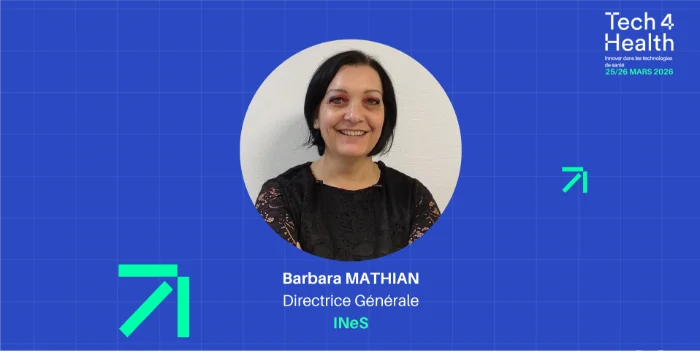
1. HOW WOULD YOU DEFINE YOUR MISSION TODAY AND THE VALUE YOU BRING TO THE HEALTH ECOSYSTEM?
Our mission is to support a useful, responsible, and clinically relevant digital transformation of the healthcare system.
Our added value is based on three pillars:
- Strategic acculturation: understanding the real stakes of AI in health.
- Operational skill development: training to decide, deploy, and evaluate.
- Facilitating dialogue between stakeholders: creating spaces where clinicians, engineers, lawyers, and managers finally speak the same language.
We do not promote technology. We work to ensure it actually improves the quality of care and system performance.
2. HOW DO YOU EVALUATE THE MATURITY OF THE HEALTHCARE SECTOR REGARDING DIGITAL AND AI CHALLENGES, BOTH FOR INSTITUTIONS AND PROFESSIONALS?
We are now in a phase of acceleration, but also of regulatory and strategic structuring.
The arrival of generative AI has played a major role as a catalyst. It has made artificial intelligence concrete, accessible, and immediately perceptible to both professionals and management. It has triggered a collective awareness: AI is no longer a distant prospect; it is already transforming clinical, organizational, and decision-making practices.
However, this acceleration comes with an imperative: mastering these tools to avoid clinical, organizational, and medico-legal risks. Unsupervised use can introduce bias, generate decision-making errors, or lead to a loss of opportunity for the patient. Maturity is therefore no longer measured only by technological adoption, but by the ability to structure responsible and secure use.
3. IN YOUR OPINION, WHAT ARE THE MOST URGENT NEEDS FOR SKILL DEVELOPMENT FOR CAREGIVERS AND DECISION-MAKERS?
The needs for skill development are considerable today, as the level of AI adoption by caregivers is progressing much faster than their level of training. We see that 90% of healthcare professionals already use AI tools in their practice, while only 37% of them claim to be sufficiently well-trained (ACSEL Health AI and Data Barometer).
The 2026 e-health Barometer, produced by PulseLife, also highlights the lack of training as the number one obstacle to the deployment of digital health.
However, AI is itself perceived as a training lever.
Given these observations, priority training needs for both caregivers and decision-makers concern understanding the fundamentals of AI, the ability to evaluate clinical quality and risks of solutions, data governance, and mastering daily usage. This is precisely where we intervene, covering initial training, ongoing in-house and cross-company training, and developing 100% remote learning paths.
4. WHAT CRITERIA ARE USED TO EVALUATE THE CLINICAL QUALITY AND RELIABILITY OF A DIGITAL SOLUTION?
The evaluation of a digital solution must rely on structured, reproducible criteria correlated with clinical impact, security, and integration into care pathways.
INeS has a structured evaluation framework that perfectly illustrates these principles: the Medical Digital Solution Score (MDS). This score is both a pre-selection tool and a reference system of criteria to compare, analyze, and position a clinical digital solution in the highly competitive e-health landscape.
To evaluate the clinical quality and reliability of a digital health solution, several dimensions must be taken into account: clinical relevance, the field of use, and the proper alignment between the solution, its target, and the care context.
This global framework makes it possible to differentiate effective and responsible tools and constitutes a solid basis for building evaluation strategies within healthcare institutions.
5. WHAT ARE THE MAJOR CHALLENGES FOR INSTITUTIONS REGARDING SECURITY, GDPR COMPLIANCE, AND GOVERNANCE OF DIGITAL TOOLS?
Institutions face three major challenges: data protection, reinforced regulatory compliance (GDPR, AI Act), and the ability to coordinate all internal stakeholders around clear governance.
The real challenge is to move from a defensive stance to proactive governance: mapping usage, internal AI policy, and standardized evaluation procedures.
6. WHAT IS THE ROLE OF MANAGEMENT, CISOS, DPOS, OR INSTITUTIONAL ETHICS COMMITTEES IN ENSURING RESPONSIBLE USE THAT COMPLIES WITH REQUIREMENTS (GDPR, SECURITY, CONSENT, TRANSPARENCY, ETC.)?
These stakeholders must be architects of trust. They must act together to set a strategic vision, secure data flows, guarantee compliance, and question human impacts, bias, and equity.
AI governance can no longer be fragmented. It must be coordinated and integrated into the institution's medical project.
7. IN YOUR OPINION, WHAT ARE THE MOST STRUCTURAL DEVELOPMENTS THAT AI WILL INTRODUCE IN THE FRENCH HEALTHCARE SYSTEM OVER THE NEXT 5 YEARS?The transformation driven by artificial intelligence in health is organized around three axes:
- Clinical decision support: AI enhances the clinician's ability to decide faster and with more precision.
- Optimization of pathways and resources: AI makes it possible to optimize the use of human and material resources, improve planning in care facilities, and better coordinate all stages of the patient journey.
- Personalization of prevention and follow-up: Perhaps the most innovative and promising axis concerns proactive and personalized prevention. Thanks to AI, it becomes possible to move beyond strictly reactive medicine to develop an approach that: identifies risks before symptoms appear, personalizes prevention recommendations based on biological, behavioral, or environmental data, and continuously monitors the health status of populations or individuals using intelligent systems.
8. WHAT ROLE DO YOU WANT INeS TO PLAY IN THE NEXT 5 YEARS?
We are at a historic turning point: AI is no longer limited to optimizing processes or enriching diagnostics. It paves the way for medicine that is more predictive, preventive, personalized, and sustainable.
In this context, INeS intends to be an active and structuring catalyst for the entire ecosystem so that this transformation is neither techno-centric nor fragmented, but deeply focused on improving care and reducing clinical risks.