AN EXCEPTIONAL JOURNEY: THE EXAMPLE OF SOPHIE ADENOT
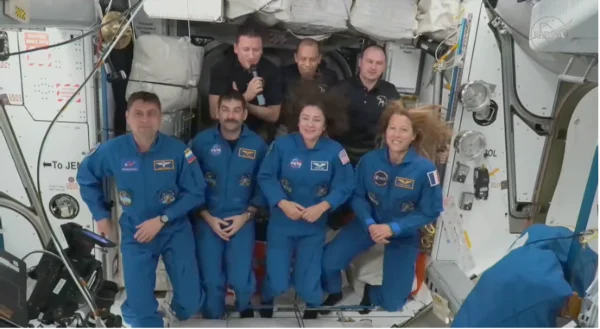
At a time when our second Frenchwoman, Sophie Adenot, is aboard the International Space Station (ISS), it is interesting to look back at her journey as a true fighter, preparing herself to be fully ready to accomplish her mission.
One does not prepare only when the mission is officially assigned. No, preparation probably begins long before selection… Gradually, the desire to work in this extreme environment emerges early in life and, consciously or not, motivation and academic choices guide us along this path. Like any hero, Sophie overcame every obstacle.
SELECTION: A PROCESS OF EXTREME DEMANDS
The first major obstacle lies in the selection process itself. Indeed, out of the 22,523 valid astronaut applications received by ESA (European Space Agency), Sophie was ultimately selected.Following an initial phase conducted through a very long online questionnaire (based on criteria determined by ESA), the second phase consists of a full day of psychomotor tests in Hamburg, followed by a third stage, also lasting one day, in Cologne (psychological assessment), and then a fourth medical phase involving a full week of comprehensive testing.
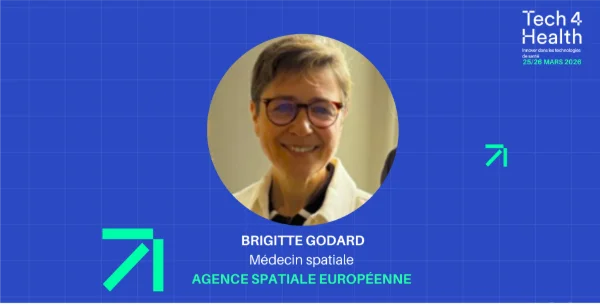
The final two stages consist of interviews with ESA representatives. For details of the selection process, see the following article: Godard and Weerts, 2018.
What a journey, after an already remarkable professional career: a graduate of Sup Aéro and holder of a master’s degree in aeronautical and space human factors science in 2004 from MIT (Massachusetts Institute of Technology).
She joined the French Army in 2005 and became a helicopter pilot. Between 2019 and 2022, after completing her test pilot training at ETPS (Empire Test Pilot School), Sophie served as a test pilot within the DGA at the Cazaux test center. She has logged more than 3,000 flight hours on over 22 different types of helicopters.
ASTRONAUT TRAINING
After this extraordinary path, when she joined ESA to begin her astronaut training, Sophie already possessed solid knowledge of aeronautics and space operations.
Her basic training to become a professional astronaut lasts one year.Then, until departure for the ISS, she dedicates herself to continuing her training and preparation: extravehicular activities (many hours in the NBL in the United States, in Houston), learning to operate SpaceX spacecraft, and preparing scientific experiments.
MEDICAL PREPARATION AND IN-FLIGHT MONITORING
After validation of the medical selection, the priority is to keep Sophie in good health. This relies on a multidisciplinary and international team.
While Sophie is monitored by a medical team in Cologne, her colleagues aboard the ISS also play an essential role in ensuring the consistency and proper execution of training, preparation for medical events (medical and technical emergencies), and the smooth conduct of the mission. Indeed, every astronaut must not only be an excellent scientist to successfully carry out experiments, but also be ready to repair… the toilets, for example, or exercise equipment such as the treadmill, bicycle, and ARED (Advanced Resistive Exercise Device).
Physical preparation is fundamental.Her team of trainers (including a physiotherapist) remains in regular contact with her after establishing her pre-, in-, and post-flight program. Adjustments are always possible.
The goal is to complete approximately two hours of exercise per day on various devices (treadmill, bicycles, and squats using ARED) in order to maintain physical condition.An adapted diet is also implemented, with the support of ESA’s nutritionist, in order to preserve her baseline health as much as possible.We know that this training is not entirely sufficient: the effects of the space environment on the body are unavoidable.
However, the weeks following her return, surrounded by her medical team, athletic trainers, and family, allow for gradual readaptation to life on Earth.During her mission, she becomes the operator of a large number of scientific studies, but also the subject of human physiology experiments, including EchoFinder and MatISS.For EchoFinder, this represents a major step forward for future lunar or Martian missions.Aboard the ISS, communication with Earth is possible and medical monitoring is ensured from the ground. Take ocular monitoring as an example: a battery of tests is performed, including ultrasound imaging.This is carried out in collaboration with the ground team, which has already conducted pre-flight examinations and guides the astronaut to obtain comparable results.This time, Sophie will have the task of using AI, coupled with virtual reality, to perform the ultrasounds.
AN EDUCATIONAL MISSION: CHLORISS
During her mission, she also engages with students by sharing certain experiments, including ChlorISS.
This educational initiative involves the simultaneous germination of Arabidopsis and mizuna seeds in microgravity aboard the ISS, conducted by Sophie Adenot, and on Earth, replicated by thousands of classrooms.The experiment will connect up to 4,500 schools, enabling them to observe the influence of light and the effects of gravity on seed germination and plant growth. The objective is to spark young people’s interest in scientific and technical disciplines.
A PAGE OF HISTORY
Sophie thus becomes the first member of her 2022 class to fly. She is the eleventh French person to travel into space for her Epsilon mission, and the second woman after Claudie Haigneré.