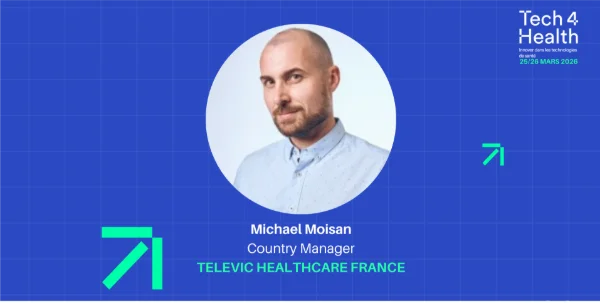
1. WHY DID YOU JOIN TECH 4 HEALTH?
We chose to join the T4H26 exhibition because the world of healthcare is undergoing profound changes. Innovations, particularly in AI, are multiplying and transforming practices. It is essential to be able to rely on specialized events like yours, which highlight innovative companies and new technologies applied to health.
The healthcare sector will always need classic and proven solutions, but to continue progressing, improve the working conditions of healthcare staff, and offer better patient care, the adoption of innovations has become indispensable.
2. IN YOUR OPINION, WHAT ARE TODAY'S PRIORITIES FOR SUCCESSFULLY "CONNECTING AND SECURING FOR BETTER CARE"?
The absolute priority is to put usage back at the heart of technology. Connecting and securing only makes sense if it lightens the daily load of caregivers, optimizes information flows, and enhances patient safety. It is imperative to offer interoperable solutions, capable of interacting with the existing digital ecosystem in healthcare facilities.
Technology should not add a layer of complexity, but rather simplify, streamline, and ensure reliability. The world of care is diverse: it includes very different patient and resident profiles, from autonomous elderly individuals to patients with disabilities or in psychiatric units. We must therefore offer flexible, modular solutions, adaptable to each type of care.
A single, rigid solution would be counterproductive. The challenge is to personalize the tool without complicating its use.
In a context of human resource strain, it is also essential that our systems help prioritize care better, track actions, and prevent incidents, while remaining discreet, intuitive, and easily adoptable.
3. MORE AND MORE CAREGIVERS ARE EXPERIENCING "DIGITAL FATIGUE". HOW CAN WE DESIGN TECHNOLOGIES THAT SUPPORT TEAMS RATHER THAN OVERWHELMING THEM?
This digital fatigue is real, and we take it into account at every design stage. The key lies in co-construction with caregivers. They are the ones who experience the daily constraints on the ground; it is therefore essential to involve them from the reflection phase. Our solutions must be ergonomic, intelligent, and non-intrusive.
This means: clear interfaces, few manipulations, a hierarchical alert logic, and above all, useful, contextual, and immediately actionable information. We must move away from a "notify everything" logic towards technology that filters, analyzes, and suggests, to lighten the mental load of teams. The right alert to the right person and, above all, anticipated.
Technology must be an invisible ally, not an additional source of stress.
4. CAN YOU SHARE CONCRETE FEEDBACK ON YOUR LATEST INNOVATIONS, PROFIT FOR EXAMPLE, AND THE BENEFITS FOR CAREGIVERS?
Absolutely. PROFIT (Process Reporting and Optimization For Integrated Teams) is one of our latest major innovations. It is a care flow analysis module that allows healthcare managers and quality managers to visualize response times, intervention times, and task distribution by staff type.
Initial feedback is extremely positive. PROFIT allows for:
- objectifying practices on the ground;
- better balancing workloads;
- identifying levers for organizational improvement;
- and above all, valuing the efforts of caregivers, often invisible in classic indicators.
This transparency, serving team performance and well-being, is today a key factor in retention and continuous improvement.